Project Jigyaasa2.0
Curiosity · circuits · social impact.
A hands-on programme inspiring 11th-grade PU girl students in the science stream across Karnataka to pursue careers in engineering and technology
What is Jigyaasa?
Jigyaasa means curiosity. It is the IEEE CAS Bangalore Chapter’s hands-on technical outreach project for 11th-grade PU girl students in the science stream, reaching Bengaluru, Mysuru, Mangaluru and North Karnataka.
Each team pairs PU students with engineering students, a faculty advisor and an industry mentor. Together they design and build a working electronics prototype with social impact — turning the physics they learn in class into circuits they can hold, test and demonstrate.
The strongest projects are demonstrated live by the PU students themselves at IEEE WinTechCon 2026, the IEEE International Women in Technology Conference in Bengaluru.
Why Jigyaasa
Bridge theory and practice
Translate 11th-grade physics into practical circuit building — resistors, sensors and logic that students wire, test and understand.
Exposure to engineering
Connect PU students with engineering students, faculty and industry mentors, and show them first-hand what a career in engineering and technology looks like.
Leadership with impact
Give engineering students the chance to define, lead and deliver a project with real social impact — and to mentor the next generation.
Six members, four roles
Every Jigyaasa team brings together students, faculty and industry.
Build, test and present
Hands-on with the circuit, the prototype and, at the showcase, the live demo.
Define, mentor and drive
Plan the project, run the meetings, teach the circuit and prototyping basics, and drive execution.
Guide the team
Technical guidance and review from the engineering college.
Track and advise
A practising engineer from the chapter who tracks progress and advises on design choices.
Engineering students are the primary drivers of the programme: beyond planning the project, they set up the meetings with PU students, teach them circuit and prototype basics, and review progress with their faculty advisor and industry mentor.
From fundamentals to a working prototype
Circuit basics
Resistors, voltage dividers and the core principles behind every circuit.
Sensors
Sensing light, temperature and distance — and turning readings into action.
Logic of systems
Basic gates and how electronic systems make decisions.
Virtual design
Simulating the circuit in open-source tools before building it.
Projects are built on Arduino or ESP32 and kept at a level PU students can own — ideas such as water conservation, smart lighting and women’s safety.
Three phases, spark to showcase
A simple rhythm for choosing, building and demonstrating the project.
Spark
- Choose a project idea with social impact and review it with the faculty advisor and mentor
- Submit a one-page proposal: what, why, how, and what the prototype will show
- Proposal reviewed and approved by the Jigyaasa core team
- Procure the component kit (budget up to ₹5,000 per team)
Innovate & execute
- Break the project into steps and give PU students hands-on build tasks
- Team meets at least twice a week, online or in person
- Regular reviews with mentors and checkpoint meetings with the core team
- Test the prototype end to end and record a 10-minute demo video
Showcase
- Core team reviews every prototype video and presentation — judged on impact, build quality and clarity of the demo
- Selected projects notified by 5 November
- PU students rehearse the story: problem, solution, impact
- Live demos by PU students at IEEE WinTechCon, 18 – 19 November, with winners recognised on stage
Selected teams
| Team | Engineering college | PU college | Faculty advisor | Industry mentor |
|---|---|---|---|---|
| Brain Bytes | Canara Engineering College | Viveka PU College, Kota | Dr. Ashwini Holla | Girish Aramanekoppa Subbarao |
| Godutai (2 teams) | Sharnbasva University, Kalaburagi | Government PU College for Girls, Kalaburagi | Dr. Asharani Patil | Jayesh Tanwani |
| Shree’s Team | Ballari Institute of Technology & Management | Aakash Institute, Ballari | Dr. Abdul Lateef Haroon P S | Subhra Prakash Giri |
| Anaha | Ballari Institute of Technology & Management | Aakash Institute, Ballari | Dr. Abdul Lateef Haroon P S | Subhra Prakash Giri |
| TechTide | BNM Institute of Technology | Aurobindo PU College, Rajajinagar | Dr. Keerthi Kulkarni | Prabhavathi P |
| Circuit Nexus | RNS Institute of Technology | Government PU College, Yediyuru | Dr. Uma S V | Sriniketh S S |
| Hack Horizon | Canara Engineering College, Benjanapadavu | Government PU College, Benjanapadavu | Dr. Ashwini Holla | Kiran K R |
| First Byte | Canara Engineering College, Benjanapadavu | Government PU College, Benjanapadavu | Dr. Ashwini Holla | Parvathi Rachakonda |
Twelve teams from different regions of Karnataka were selected. Team listings are being updated.
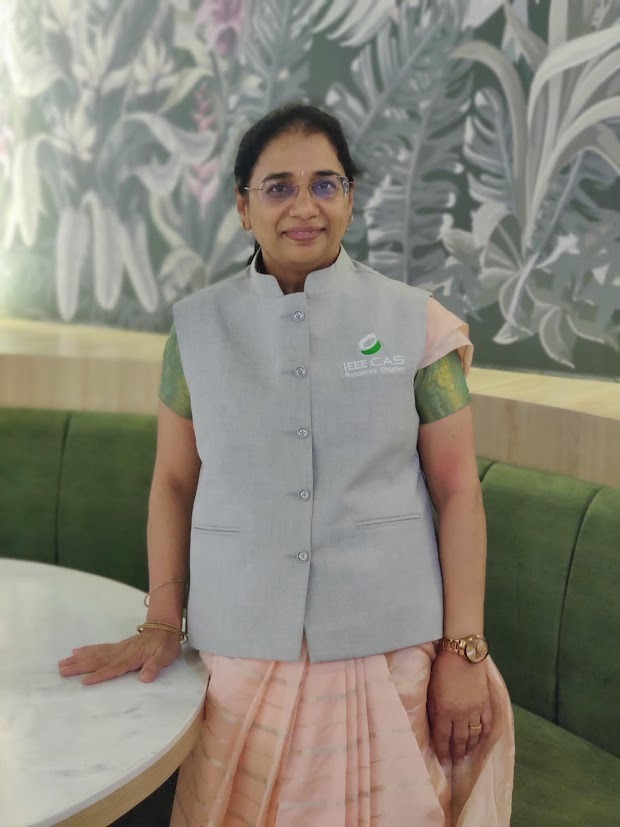
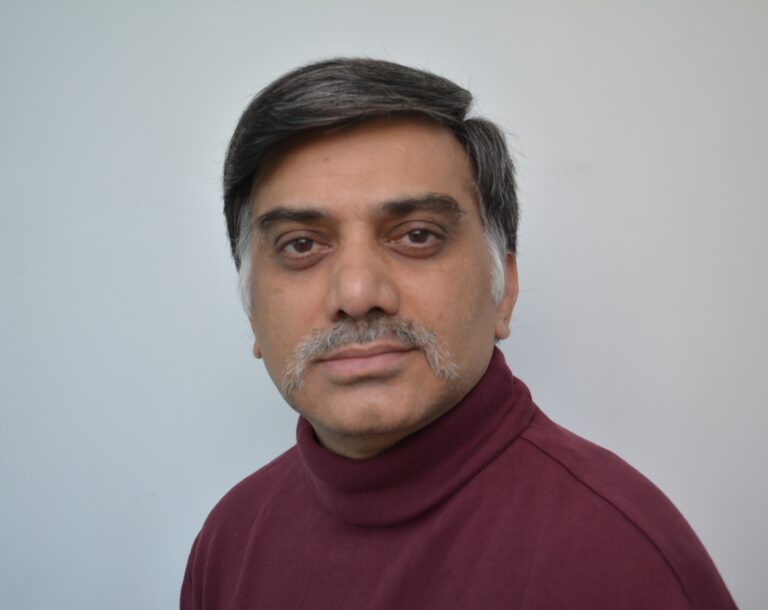
Organising committee

Live at IEEE WinTechCon 2026
Demos by PU students
Selected projects are demonstrated live by the PU students who built them, at the 7th IEEE International Women in Technology Conference — 18 – 19 November 2026, Radisson Blu, Marathahalli, Bengaluru.
Travel covered
Registration, travel and stay are covered for selected teams travelling from outside Bengaluru. Winners are recognised on stage.
Resources
Free Arduino tutorials
Step-by-step Arduino tutorials from the IEEE Solid-State Circuits Society — a good starting point for PU students.
Questions
Teams should route questions through their faculty advisor and industry mentor. For anything else, write to the chapter.
Curiosity is where engineering begins
Jigyaasa 2.0 — PU students, engineering students, faculty and industry building circuits with social impact across Karnataka.